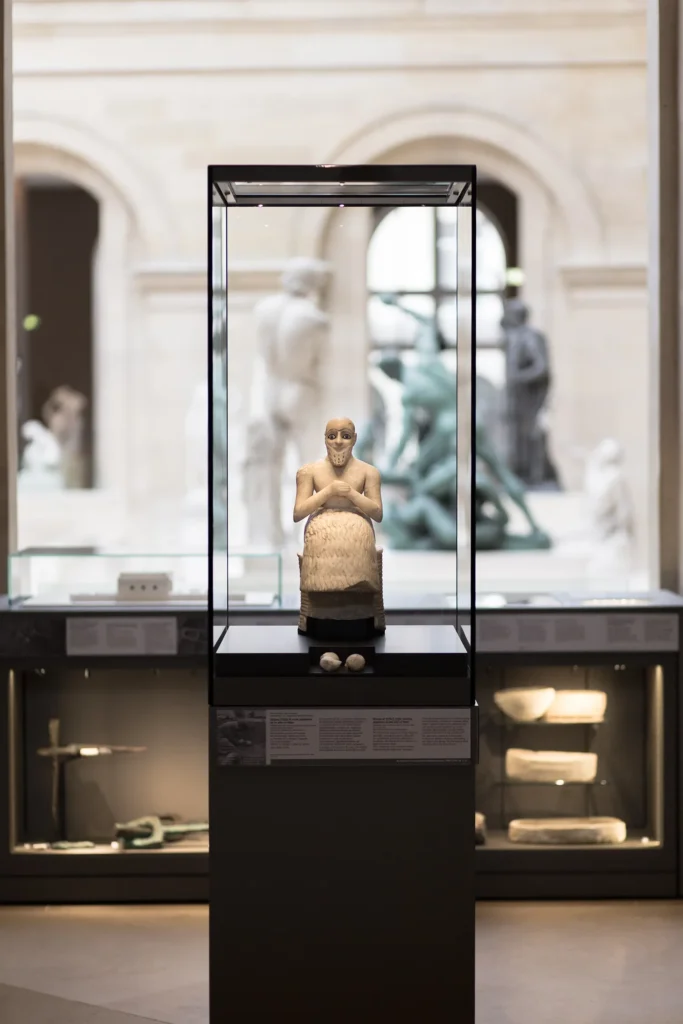
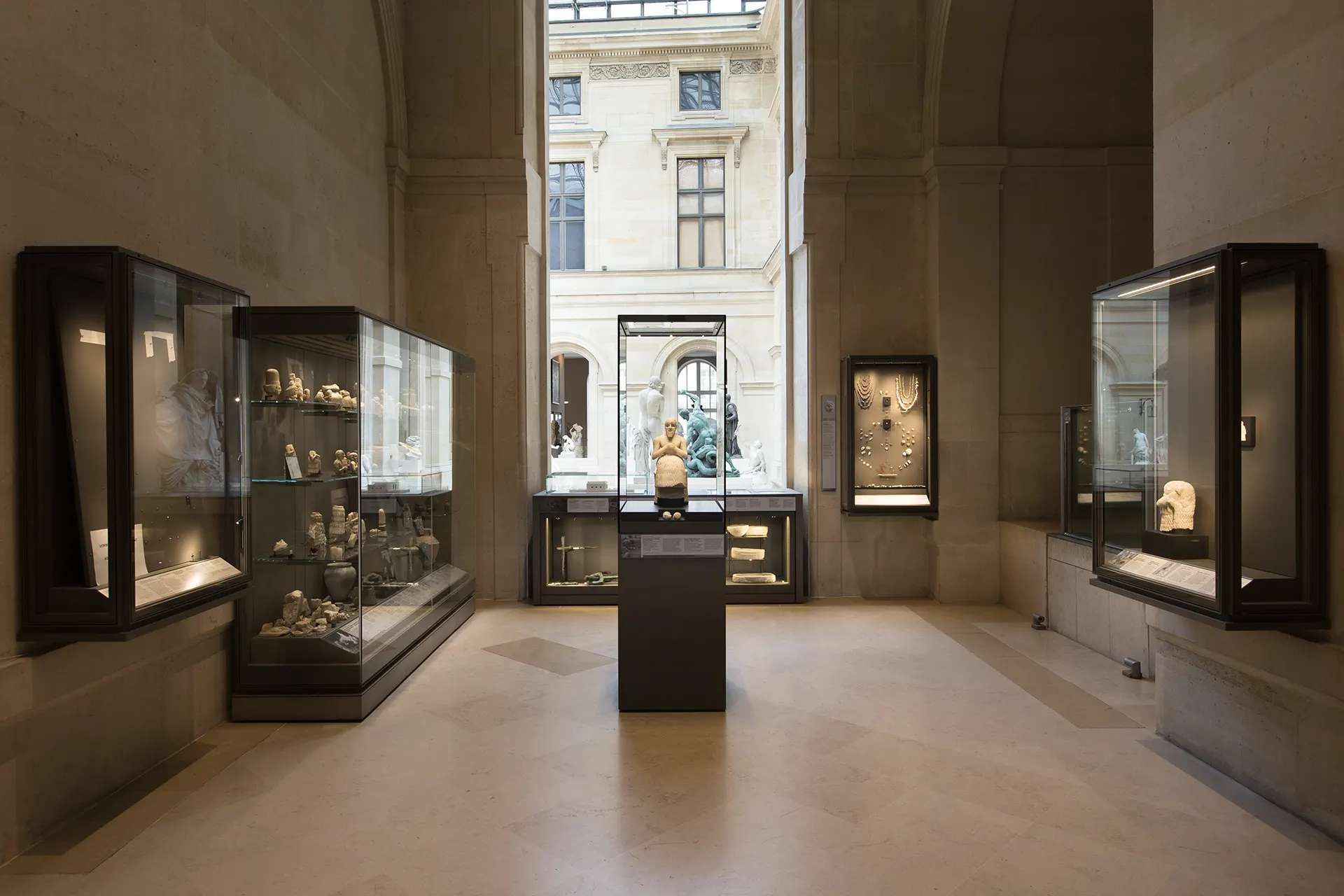
One of the most important exhibits of the Louvre Museum is found in the Department of Near Eastern Antiquities. It is a perfectly preserved masterpiece dating back to 2340 BC.
The statue of Ebih II was discovered at the archaeological site of Mari in Syria by the French archaeologist André Parrot in 1933, during the excavations that uncovered various ancient temples in Mesopotamia.
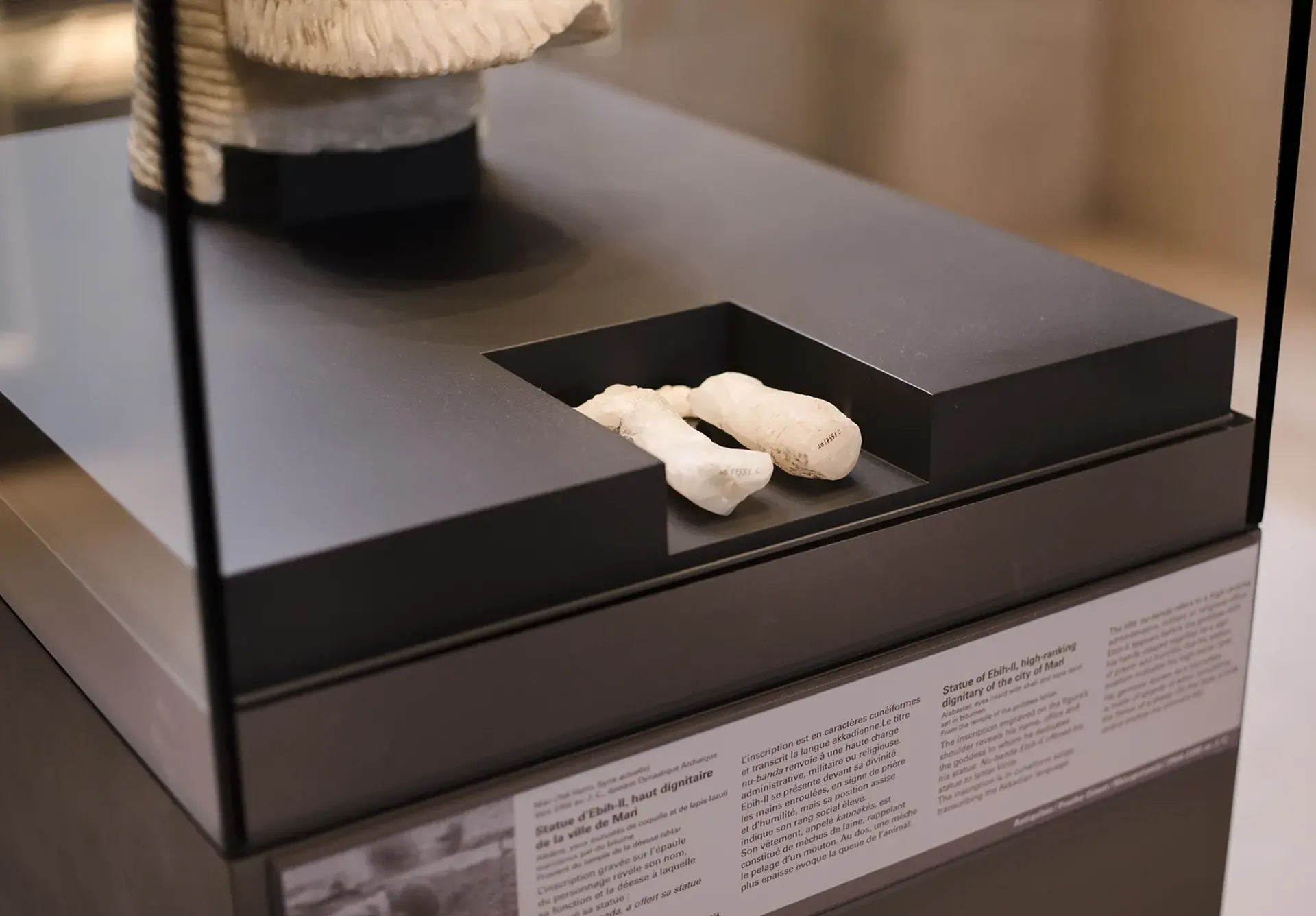
The worshipers of that time used to offer statues of themselves to the gods as proof of their eternal faith to them. Such is also the case with the statue of Ebih-II.
The statue depicts a praying figure in what could be described as a paradigmatic style of Sumerian sculpture produced during the archaic dynasties. The use of expensive materials such as shells and lapis lazuli indicate that Ebih II was an important figure of his time.
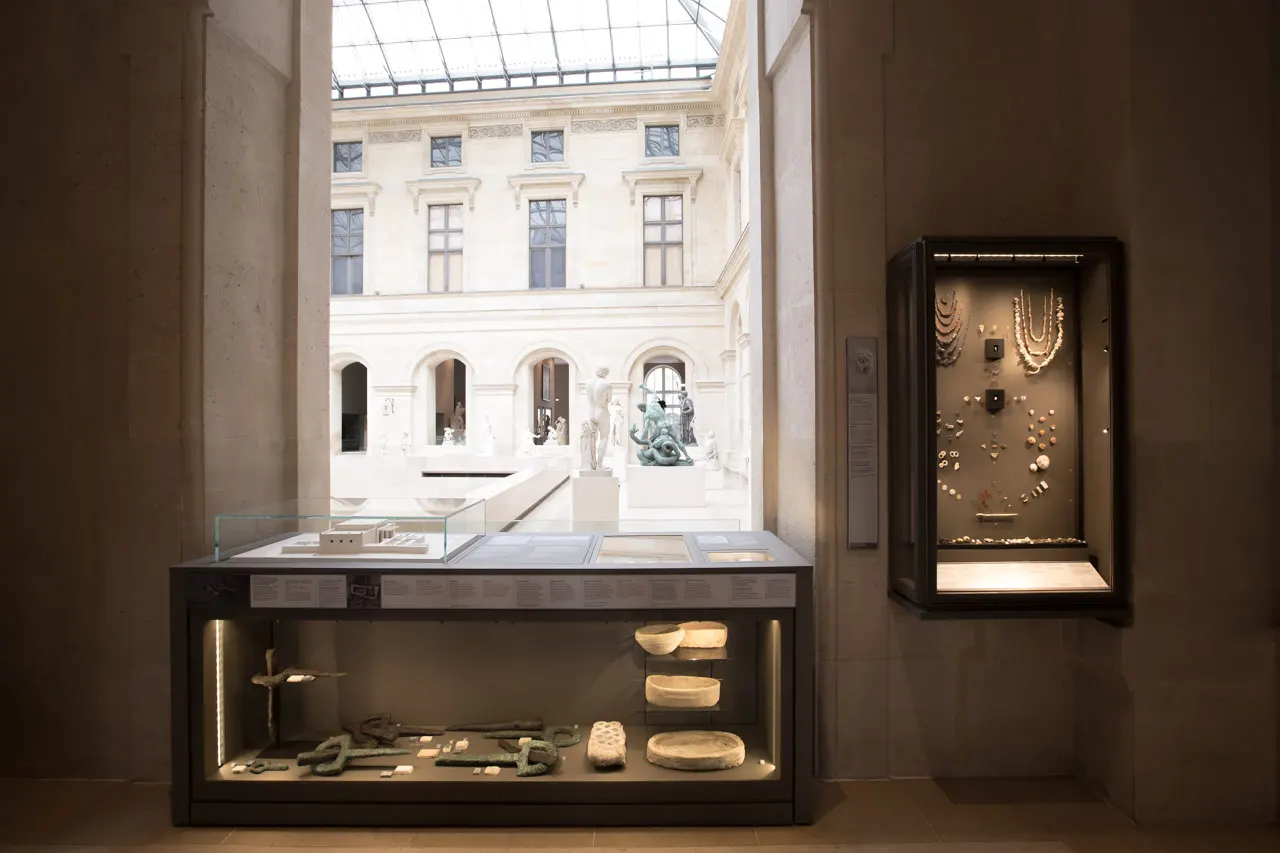
In 2019, MUEVO was selected to implement the new museography in Salle Mari. In this project, our design philosophy was guided by the need to present the statue of Ebih-II in all its splendor, whilst also highlighting the rest of the archaeological findings that are presented in Salle Mari.
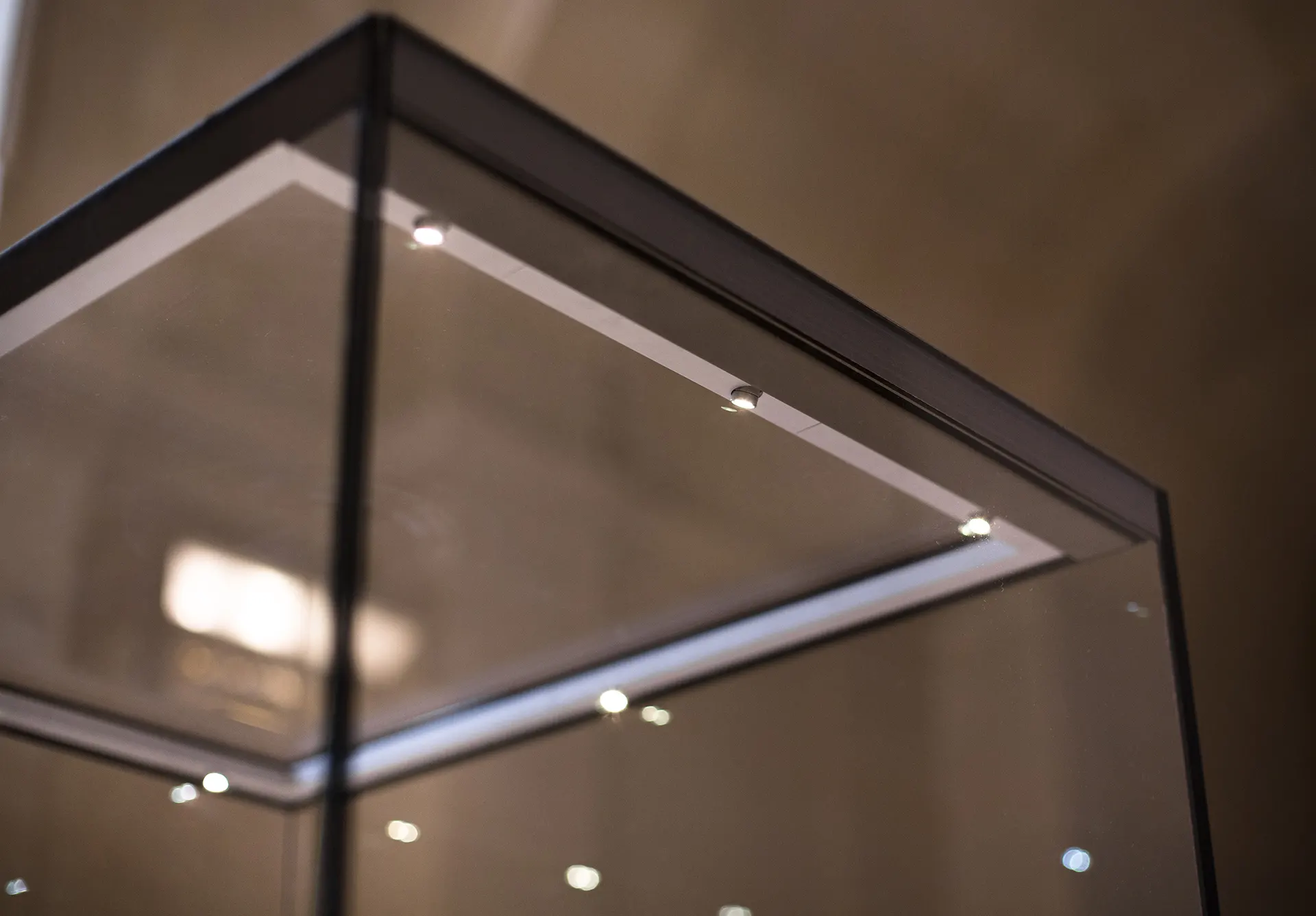
Ebih II’s display case was constructed with utmost attention to detail, using special exhibition lighting. The artifact thus seems to radiate light from within, and thanks to the use of virtually invisible glass, every detail can be captured by the visitor’s eyes.
Completion Date: 2019
Type: Permanent Collection
Collection Scenography: Établissement public du Musée du Louvre