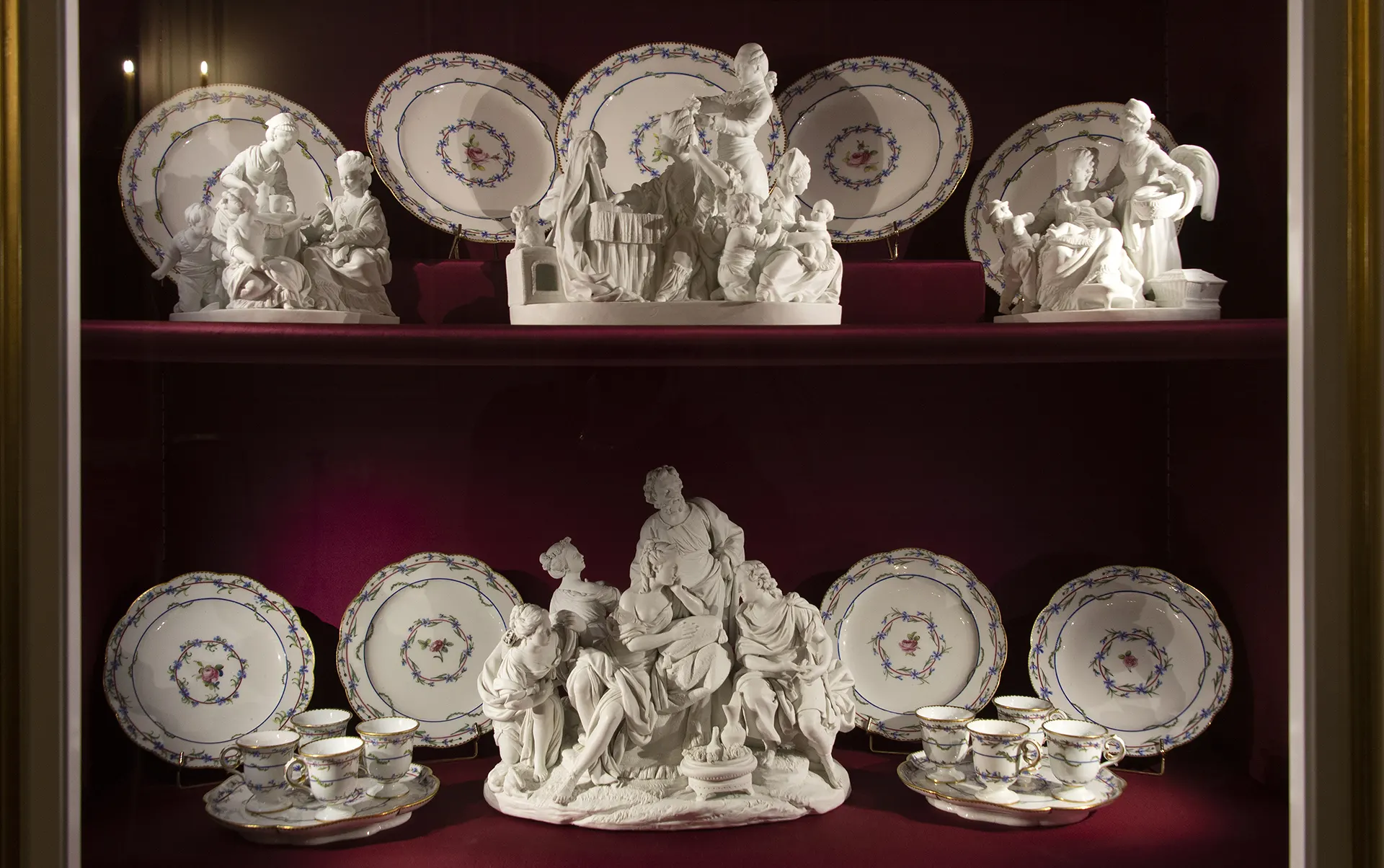
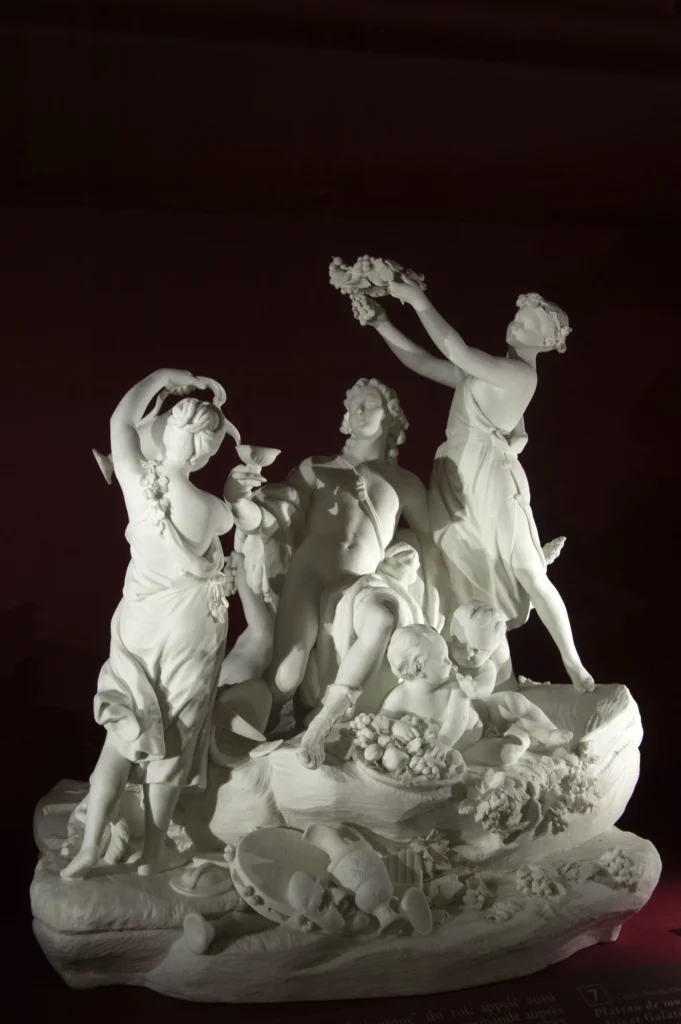
The history of French porcelain began in the 17th century. It took almost 50 years for the French craftsmen to learn this art, whose know-how was an exclusive privilege of the Chinese manufacturers.
As soon as the secret of its manufacturing and painting became known, porcelain became associated with the French way of living. This reputation spread beyond the borders of the French Empire and influenced the eating habits of Europe, while serving as an indication of good taste and nobility.
In 1760, the royal porcelain factory “Manufacture nationale de Sèvres” dominated the European market and introduced the “Rococo” style, which was mainly associated with Louis XVI.
The collection of porcelain items at the Palace of Versailles rarely included pieces of Louis XV and his grandson, Louis XVI: almost the whole collection was looted during the French Revolution and scattered throughout the country. Since 1990, there has been a systematic effort to regain the royal porcelain items that have been described as masterpieces of French decorative art.
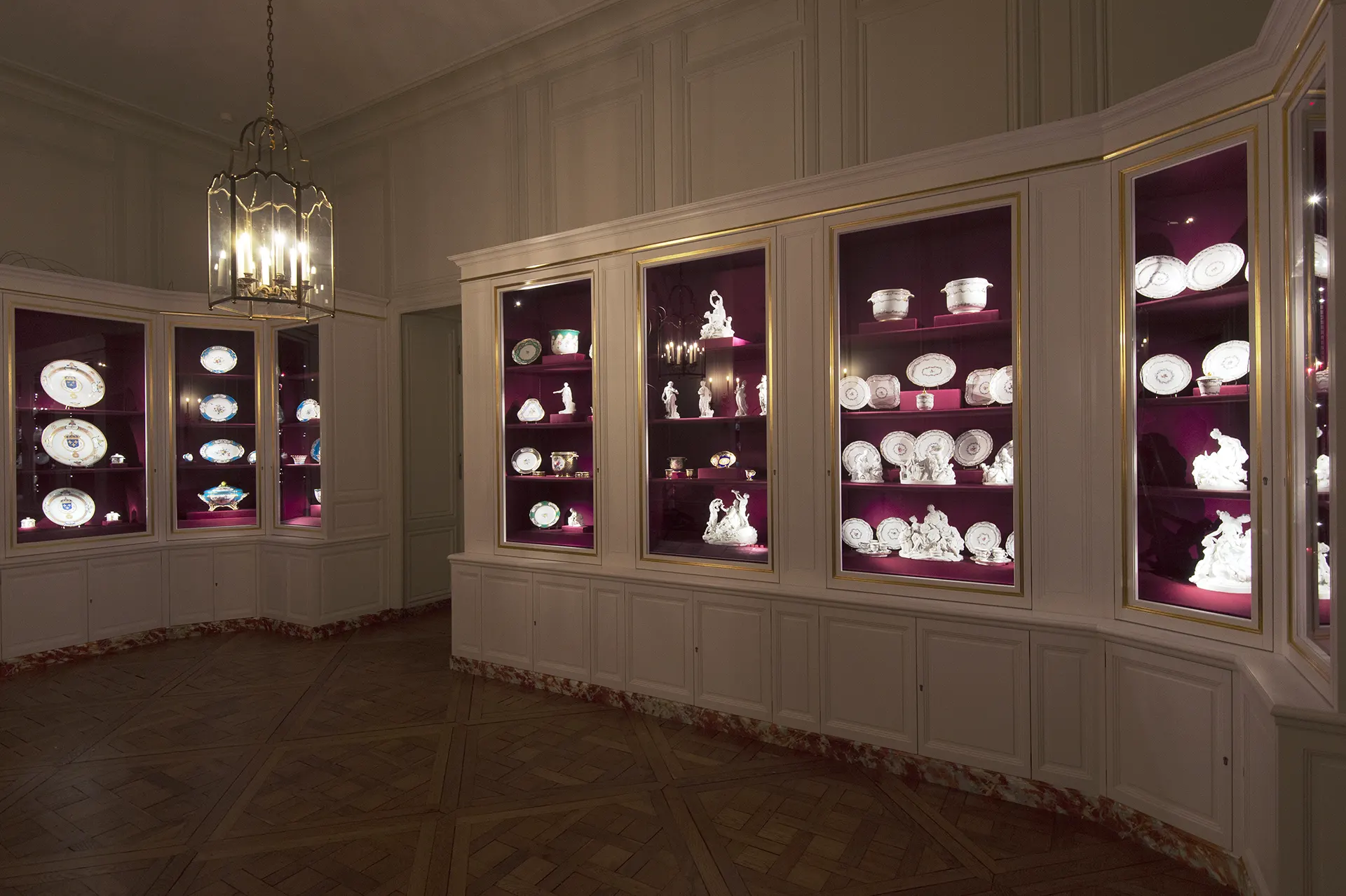
The architecture of the display cases follows a contemporary style on the exterior side, while their interior is equipped with the most advanced security, conservation and lighting systems to house the royal porcelain items.